What fluids can fix, what they can't, and when to stop reading and go
Stomach Bug Dehydration in Broomfield: When to Get Help
In short
Most people ride out a stomach bug, but some quietly slide into real dehydration while trying. If you can hold down teaspoon-sized sips, oral rehydration still works and should be tried first. IV fluids fit a middle band: too dehydrated to fix by mouth, well enough not to need a hospital. They replace lost volume, but they do not kill the virus or bacteria, shorten the illness, or diagnose why you are still vomiting, and feeling better is not the same as being better. Fainting, confusion, no urine for eight or more hours, blood in vomit or stool, or severe abdominal pain mean an emergency department, not a house call. This page helps you judge how dehydrated someone is, explains what IV fluids fix and don't, and lists the signs, for adults and children, that need care now.
A stomach bug empties you from both ends and then makes drinking feel impossible. Most people ride it out. Some people quietly slide into real dehydration while trying to. This page is for telling those two situations apart — and for knowing when neither a sports drink nor a house-call IV is the right answer, and an emergency department is.

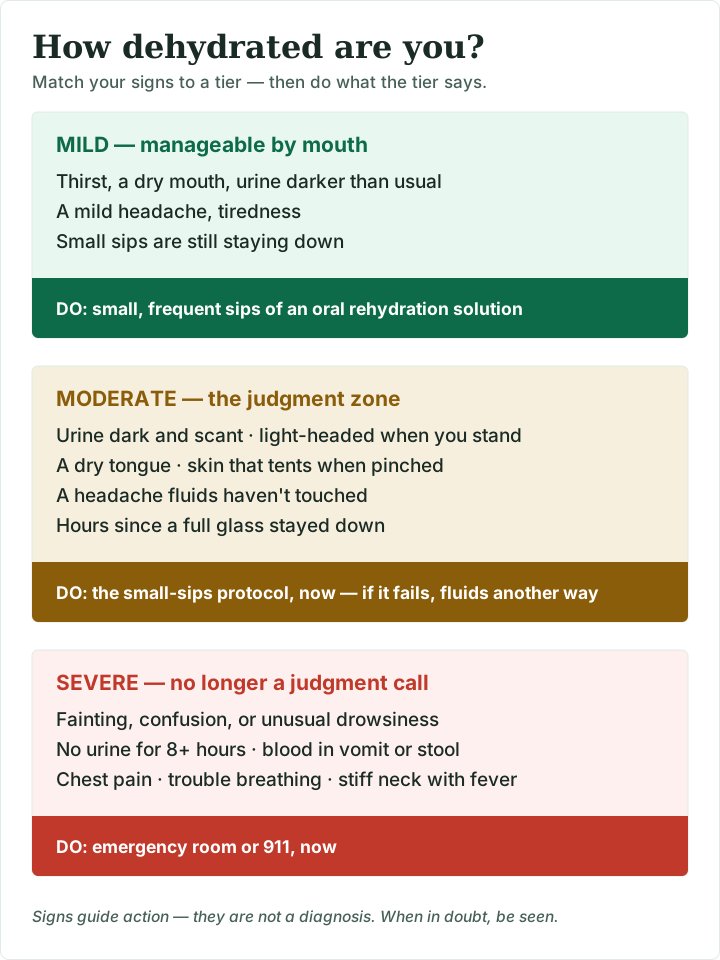
How dehydrated are you, really
You cannot measure this precisely at home, but the observable signs line up well enough to act on.
Mild — manageable by mouth
Thirst, a dry mouth, darker urine than usual, a mild headache, tiredness. Unpleasant, common, and fixable by drinking properly — small and often, not heroic and all at once.
Moderate — the judgment zone
Urine that is dark and scant, light-headedness when you stand, a dry tongue, skin that tents when pinched, a headache that fluids have not touched, hours since you kept a full glass down. This is where "keep sipping" starts to compete with "get fluids another way."
Severe — no longer a judgment call
The list in the box below. Not a maybe.
Rehydrating by mouth first
If you can hold down teaspoon-sized sips, oral rehydration still works and should be tried first — done properly, which is smaller and slower than almost everyone does it.
The full protocol, including what to drink and what to avoid, is at Oral Rehydration First. The short version: one to two teaspoons of an oral rehydration solution every few minutes, scaled up only as your stomach allows. Not chugged water, which tends to come straight back.
What IV fluids fix, and what they don't
Whoever puts an IV in you should know the difference, and should be checking for it — before and after. That is a screening question worth asking of any provider.
What they fix
IV fluids solve exactly one problem: volume. When vomiting has emptied you and drinking refills you slower than you are losing it, fluid into a vein bypasses the stomach that is rejecting it. For dehydration itself, that works, and works quickly.
What they don't
They do not kill the virus or bacteria that started this, shorten the illness, diagnose why you are still vomiting on day three, or make it safe to skip a medical assessment you actually need. A drip can make a person with appendicitis feel temporarily better. That sentence should worry you — feeling better is not the same as being better, and fluids can paper over a problem that is still getting worse.
Where an in-home IV fits
Between "sips are staying down" and the red-flag box, there is a middle band: too dehydrated to fix by mouth, well enough not to need a hospital. That band is what mobile IV services exist for, ours included — details of how a visit works are at mobile IV therapy in Broomfield. What matters more than who you pick is that whoever arrives screens you properly before treating and tells you honestly when you belong somewhere else.
Frequently asked questions
How long does a stomach bug last?
Most viral gastroenteritis runs 24–72 hours. If vomiting has not eased after 48 hours, or anything is getting worse rather than better, get assessed rather than waiting it out.
Can I just drink water?
Water rehydrates but replaces no electrolytes, and big gulps often bounce. An oral rehydration solution in small, frequent sips does both jobs better.
When do children need to be seen?
Sooner than adults. Infants and small children dehydrate fast — no wet nappy for six to eight hours, listlessness, crying without tears, or a sunken soft spot means medical care now, not a house call.
Does an IV cure the bug?
No. It fixes the dehydration the bug caused. The bug finishes on its own schedule.
Go to an ER or call 911 if
Fainting or near-fainting · confusion or unusual drowsiness · no urine for eight or more hours · chest pain · trouble breathing · blood in vomit or stool, or black stool · severe or worsening abdominal pain · a stiff neck with fever · a rigid abdomen · signs of dehydration in an infant or a frail elderly person. These need assessment and equipment no house call carries — including ours.