The $2 fix to try before the $200 one
Try Oral Rehydration Before You Book an IV in Broomfield
In short
If you can keep small sips down, oral rehydration done properly fixes most mild and moderate dehydration for the price of a pharmacy sachet, with no needle and nobody in your living room. This site is operated for a company that sells IV therapy, and this page exists to talk a fair number of readers out of buying it. The method is slow on purpose: one to two teaspoons of an oral rehydration solution every few minutes, scaled up only as your stomach allows, rather than a big glass of water that comes straight back. It is for anyone who has decided they cannot keep anything down. The page covers why drinking seemed not to work, the step-by-step method, what to drink and avoid, how to tell after an honest two to three hours that it has failed, and the signs that mean medical care now.
This site is operated for a company that sells IV therapy, and this page exists to talk a fair number of readers out of buying it. If you can keep small sips down, oral rehydration done properly fixes most mild and moderate dehydration — for the price of a pharmacy sachet, with no needle and nobody in your living room. Here is how to do it right, and how to tell when it genuinely is not working.
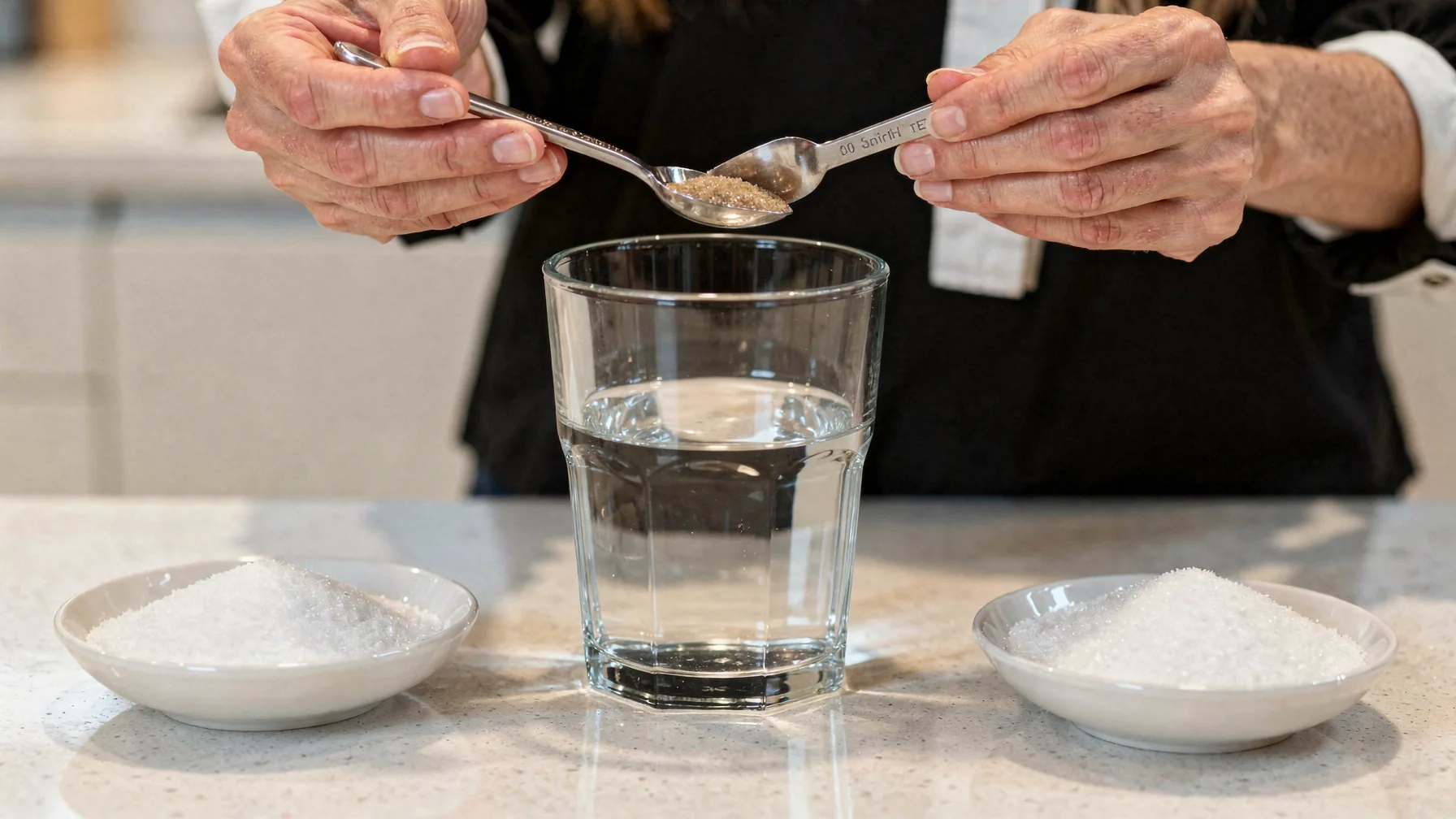
Why drinking "didn't work" the first time
The commonest story: you felt terrible, drank a big glass of water, and it came straight back up. Conclusion — "I can't keep anything down." Often the truer conclusion is "I can't keep that much down that fast."
A nauseated stomach rejects volume. It will frequently tolerate what it barely notices: teaspoon-sized amounts, spaced out. Rehydrating this way is slow and boring and it works — it is what children's hospitals teach parents to do at home, for the same reason.
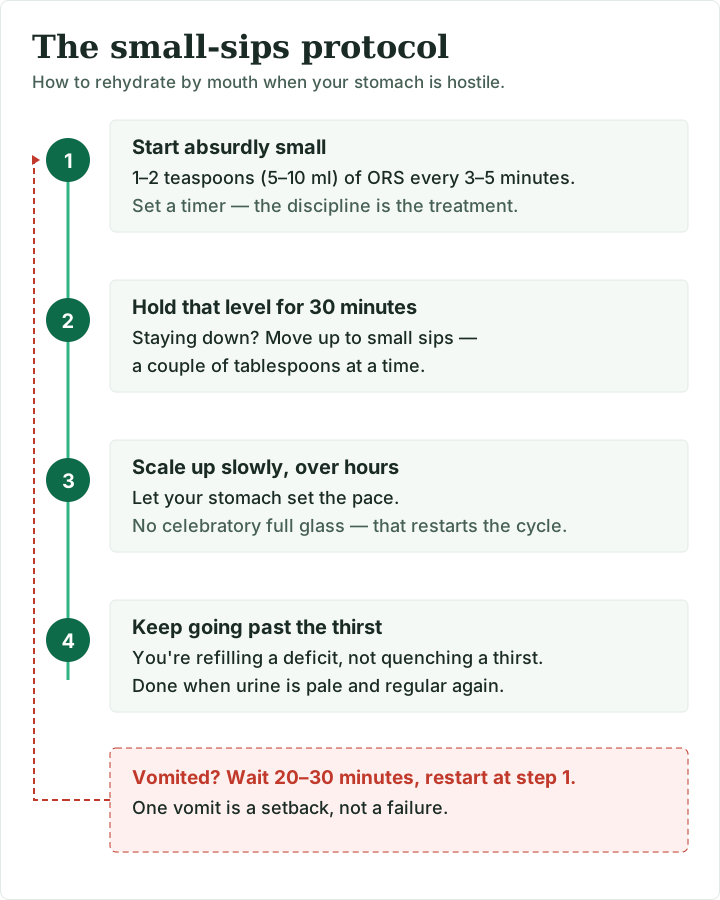
How to rehydrate by mouth properly
- Start absurdly small. One to two teaspoons (5–10 ml) of fluid every three to five minutes. Set a timer if it helps; the discipline is the treatment.
- Hold the level for half an hour. If it stays down, go to small sips — a couple of tablespoons at a time. Do not celebrate with a full glass; that is how you restart the cycle.
- Scale up slowly over a few hours toward normal drinking, letting your stomach set the pace.
- Keep it going. You are refilling a deficit, not quenching a thirst — continue past the point of feeling less thirsty, until urine is pale and regular again.
If vomiting interrupts, wait 20–30 minutes and start again at step one. One vomit is a setback, not a failure.
What to drink
Reach for an ORS
An oral rehydration solution beats everything else because dehydration from illness takes salts out with the water, and water alone puts back only half the loss. Options, in no particular order: Pedialyte, DripDrop, Liquid I.V., any pharmacy-brand ORS sachet — or the WHO's home recipe: six level teaspoons of sugar and half a level teaspoon of salt in a litre of clean water.
Workable substitutes
If ORS is not to hand: diluted apple juice (half and half with water) has decent evidence in mild cases; broth adds salt; sports drinks are mediocre but better than nothing.
Avoid
Alcohol (a dehydrant, whatever the cocktail lore says) · undiluted fruit juice and full-sugar soda if diarrhoea is in the picture (they can make it worse) · caffeine in quantity · plain water in large volumes when you have been vomiting — it replaces no salt and bounces easiest.
When oral rehydration genuinely fails
Give the method above an honest two to three hours before ruling it out. It has failed if:
- Teaspoon-sized sips will not stay down even after resting the stomach.
- Losses are outrunning intake — you are vomiting or purging more than you are taking in, hour over hour.
- The dehydration signs are deepening anyway: darker and scanter urine, light-headedness on standing, a dry tongue, tenting skin.
At that point fluid needs another route into you, and the honest options are a clinician visit that can deliver IV fluids, an urgent care, or — with any red flag below — an emergency department. If you are weighing the first option, read How to Vet a Provider before you pick a company; the market is uneven and ten minutes of checking matters more than any brand name, including the one behind this site.
Frequently asked questions
How fast does oral rehydration work?
Kept-down fluids are absorbed within an hour or so; most people feel the turn within a few hours of steady sipping. Full recovery of colour and energy trails by a day or two — that lag is normal, not failure.
Is Pedialyte actually better than Gatorade?
For illness, yes — ORS products carry more sodium and less sugar, which is the ratio rehydration needs. Sports drinks are formulated for sweat, not stomach bugs.
Why is more detail on stomach bugs elsewhere?
Because judging the severity of dehydration is its own question — Stomach Bug Dehydration covers the signs, the timeline, and when to be seen.
Why is an IV company telling me this?
Because it is true, and because a provider you can trust with a needle should be one that was straight with you when you did not need it.
These signs mean medical care now, not more sips
Fainting, confusion, or unusual drowsiness · no urine for eight or more hours · blood in vomit or stool, or black stool · severe or worsening abdominal pain · chest pain or trouble breathing · a stiff neck with fever · any of this in an infant or frail elderly person. Skip the protocol and be seen.