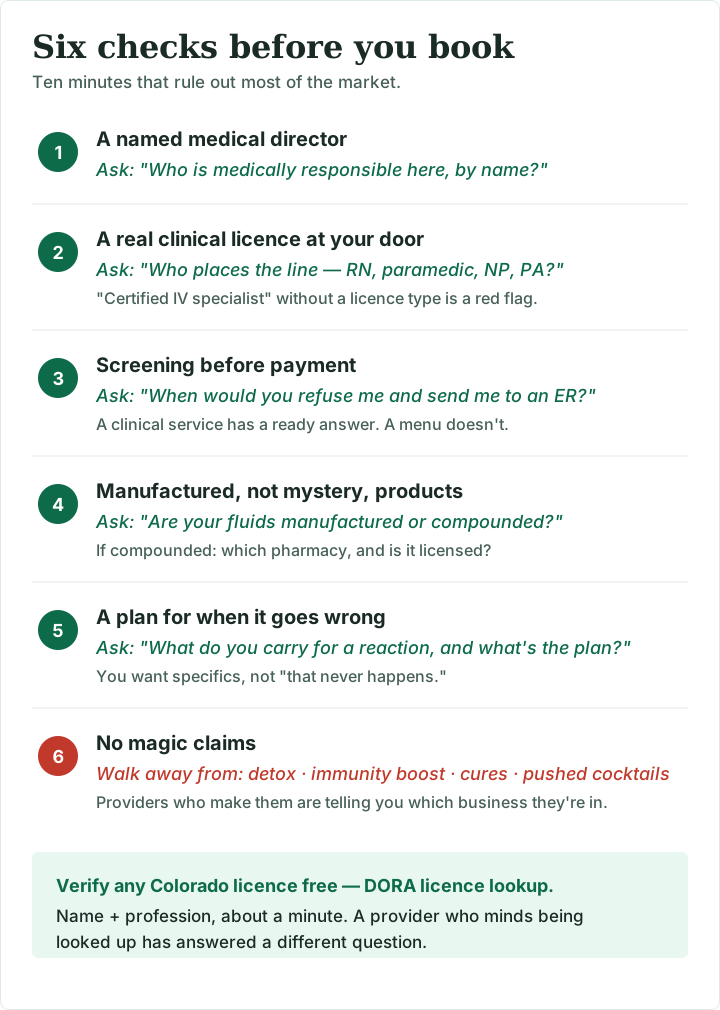
Six checks that take ten minutes and rule out most of the market
How to Vet a Mobile IV Provider in Broomfield, Colorado
In short
If you are a healthy adult with mild dehydration or an ordinary hangover, a wellness drip is usually not worth the money, because oral rehydration fixes most of what these services sell. If you genuinely need IV fluids, ten minutes of checking separates the clinical operators from the party services. Colorado licenses practitioners, not IV companies, so the vetting burden is on you. This page gives six checks: who is medically responsible, who places the line, what screening happens first, whether the fluids are manufactured or compounded, what happens if something goes wrong, and which claims are worth walking away from. It also shows how to verify a Colorado licence, free, in about a minute. The same standard applies to the whole market, including the provider behind this site.
Start with the uncomfortable part: if you are a healthy adult with mild dehydration or an ordinary hangover, a wellness drip is usually not worth the money. Oral rehydration fixes most of what these services sell, at a fiftieth of the price. Anyone selling you an IV should be willing to say that, so we are saying it.
If your situation genuinely calls for IV fluids — you cannot keep sips down, you are behind on fluids and sliding — then the industry you are about to call into is uneven in ways that matter, and ten minutes of checking separates the clinical operators from the party services. Here is what to check, in order of how much it tells you.

Colorado licenses people, not IV companies
There is no "licensed IV clinic" credential in Colorado. The state licenses practitioners — nurses, paramedics, physicians, physician assistants — not mobile IV businesses. A 2026 bill that would have imposed requirements on med-spa-type operators, SB26-130, was postponed indefinitely in committee in April 2026 and did not become law (the full story is at Colorado's IV Rules).
The practical consequence: the vetting burden is on you. "Fully licensed and certified" on a website tells you almost nothing until you know who holds the licence and what kind it is. The checks below are how you find out.
The six checks
1. Who is medically responsible
IV fluids and additives are prescription items. Somewhere behind any legitimate service is a prescriber — a medical director with prescriptive authority who sets the protocols and answers for them.
Ask who that is, by name, and what their role covers. A real operation answers instantly. Evasion, or "our founder is very experienced," is your cue to hang up.
2. Who places the line
The person at your door should hold a recognisable clinical licence: registered nurse, paramedic, nurse practitioner, physician assistant, or physician. Ask for their name and licence type before booking.
Be alert to the phrase "certified IV specialist" offered instead of a licence type — a certificate is not a licence, and the distinction is exactly where corners get cut.
3. What screening happens first
A provider behaving like a medical service asks about your symptoms, conditions, medications, allergies, and pregnancy status — and measures your vital signs before treating you. The better ones measure again afterwards.
A provider behaving like a vending machine takes your order from a drip menu and asks for your address. If nobody asks a health question before taking payment, no assessment is happening, whatever the website says.
The single best question in this category: "Under what circumstances would you refuse to treat me and send me to an ER instead?" A clinical service has a ready answer. A sales operation has never considered the question.
4. Where the fluids come from
Ask whether their products are commercially manufactured or compounded. Manufactured means made under a pharmaceutical manufacturer's quality system. Compounded means mixed by a compounding pharmacy — which is legal, but is also where regulators have found this industry's most serious safety failures, and it deserves follow-up questions: which pharmacy, and is it licensed?
While you are at it: ingredients should be named, in writing or on request. "Proprietary blend" is not an answer a medical service gives.
5. What happens if something goes wrong
Reactions to IVs are rare and the good operators are prepared for them anyway. Ask what the person at your door carries for an allergic reaction, and what their escalation procedure is. You are listening for a concrete answer — epinephrine, a protocol, a low threshold for calling 911 — not reassurance that problems never happen.
6. Claims worth walking away from
The marketing language of this industry is its most reliable warning label. Treat these as disqualifying: cures your hangover/flu/COVID · "flushes toxins" or "detox" · "boosts your immune system" · prevents illness · anti-aging promises · pressure to add vitamin cocktails you did not ask about.
None of these claims has meaningful evidence behind it, and providers who make them are telling you which business they are in. For what it is worth: we sell IV therapy, and we make none of them.
How to verify a licence in Colorado
Every clinical licence in the state can be checked in about a minute, free.
1. Find the register
Search "Colorado DORA licence lookup" or go to the Division of Professions and Occupations licence search.
2. Look them up
Enter the practitioner's name and profession (e.g. registered nurse).
3. Read the result
Check the licence is active and free of board discipline. A provider who reacts badly to being asked for a name you can look up has answered a different question, and answered it clearly.
Frequently asked questions
Is mobile IV therapy legal in Colorado?
Yes, when prescription items are handled under proper medical authority by licensed practitioners. The business itself is not licensed; the people and the prescribing are what to check.
What should it cost?
Around $150–$300 for basic hydration in the Denver metro, more for specialty additives. Far below that range, ask what is being skipped; far above, ask what you are paying for.
Is an IV bar safer than a mobile service?
The storefront is not the safety feature. The licence, the screening, the sourcing and the emergency preparedness are — and both formats can pass or fail those checks.
Do these six checks apply to Intravene too?
Yes, deliberately. This page describes the standard we think you should hold the whole market to, us included.